Karma Yoga in Escondido

The term, karma yoga, implies a realization of the essence of Life by the service to life. Karma yoga is most often defined as selfless service. Great karma yogis include Mother Teresa, Gandhi, His Holiness the Dalai Lama, Ammaji; those who give tirelessly for the benefit of others. At the lay level, those persons who take up the role of parenting and stirve to do it well are, in my opinion, karma yogis!

In August our Teacher Trainees participated in a work day at Drikung Kyobpa Choling, a Tibetan Buddhist Meditation Center in Escondido. The director of the center, Drupon Samten Rinpoche, is indeed a karma yogi. With his assistant, Ani Chodron, he has planned and built a beautiful temple almost single handedly. They are currently expanding the Center to accommodate more functions and to serve the increasing Southern California population of Tibetan Buddhist practitioners.

On this hot August day we donned our work clothes, hats, and gloves to help organize and create space for the ongoing construction at Drikung Choling. Sweaty and dirty, yes, but so lovely to experience what community energy can accomplish! And as you see by the photos, we had fun as well!

Iyengar Yoga – Use of Props

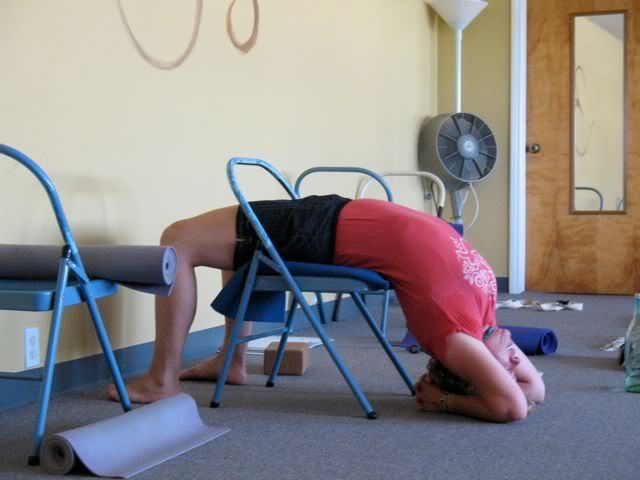
Iyengar Yoga as developed by the Indian master, BKS Iyengar, is one of the more structured of the yoga asana systems, with great emphasis on precision. As a teenager Mr. Iyengar learned the basics of yoga asana from his teacher, T. Krishnamacharya. He is a nephew of Krishnamacharya by marriage and lived in the household of his teacher for a number of years. Iyengar later went on to study the asanas in great detail through personal practice, and published one of the first comprehensive books about yoga asana, “Light On Yoga” in the 1970’s. The Iyengar tradition uses equipment (or props) as a way of deepening one`s experience in the yoga postures, as well as making use of props in therapeutic situations.

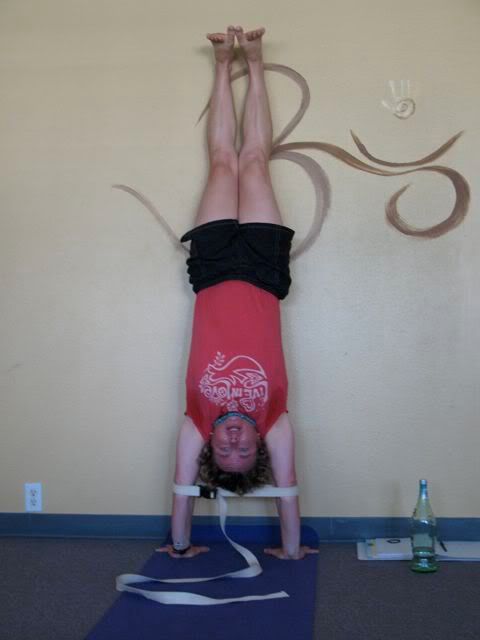
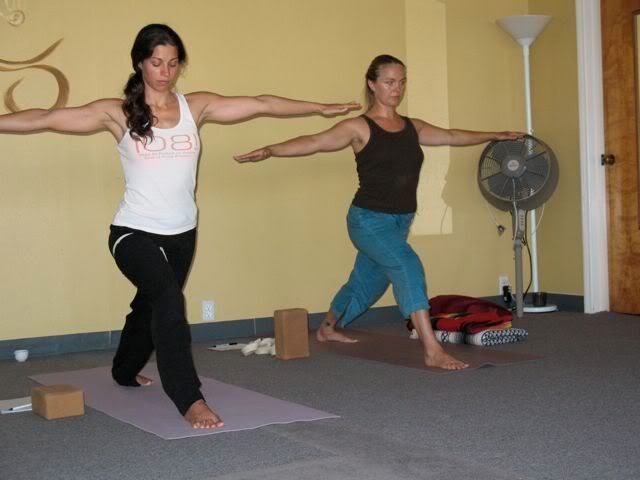
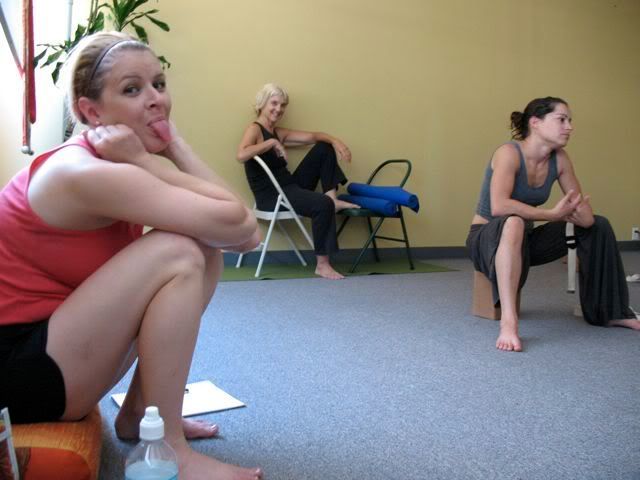
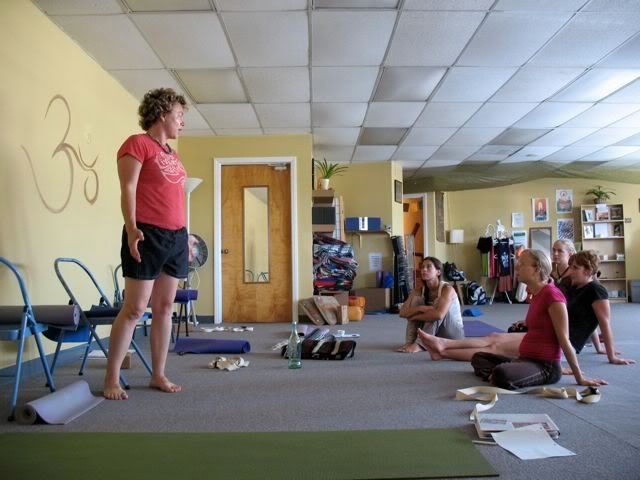
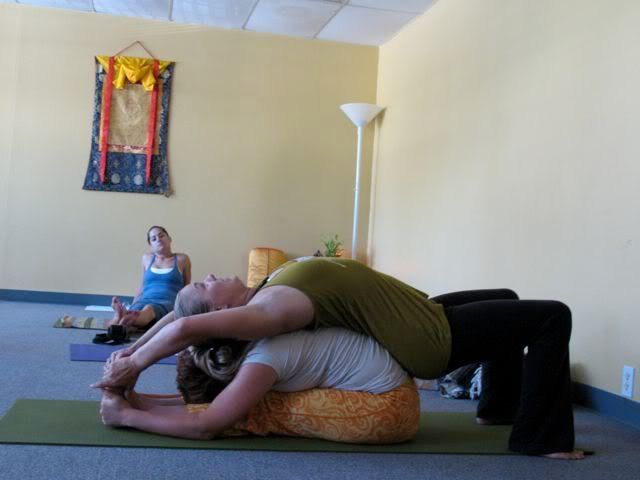
On August 2&3 Yoganic teacher, Kim Kolibri, a certified Iyengar instructor, presented workshops on Iyengar sequencing and use of props. Kim is an especially gifted verbal instructor, inspiring with her understanding and execution of Iyengar’s techniques. In the following photos we have documented some of the work and “play” of our Teacher Training group on this weekend. Click on the photos if you wish a larger view.

Teaching with the Hands & Voice

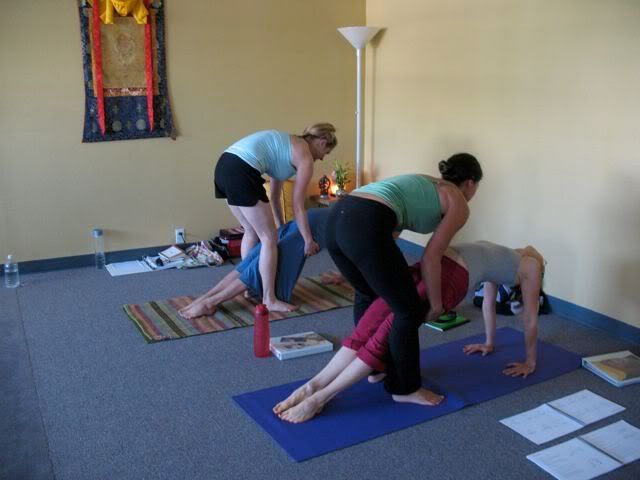
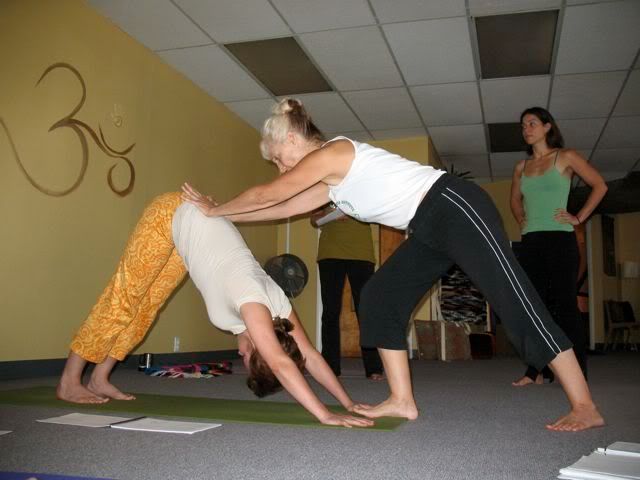
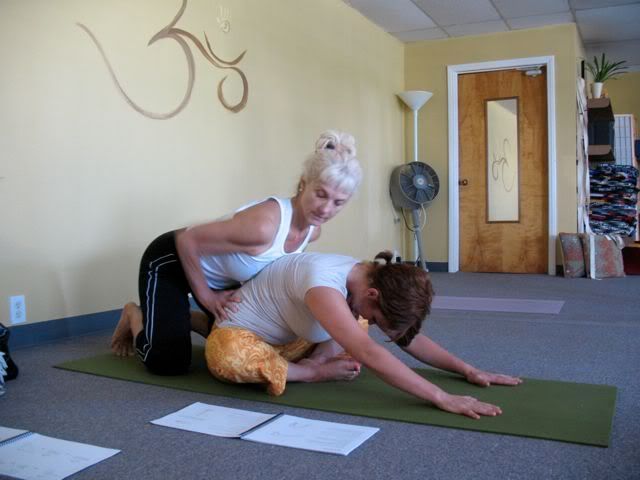
In the Ashtanga Vinyasa system the primary style of study as taught by Master Teacher Pattabhi Jois at his Indian yoga shala (school) in Mysore, India is called “Mysore practice”. In these classes students practice in the room with the teacher but there is very little verbal instruction. Students are expected to have their sequence memorized. The teacher is available to give hands on assistance and advice, much like a private class in a group class situation. In week twelve of our Teacher Training we have begun studying how to assist with the hands as well as teaching with the voice.

Teaching with the voice is the more common way to conduct a class and certainly the most direct way to share information. Just as practicing the yoga postures is necessary in order to become proficient in their execution, so practice teaching with the voice is a necessary requirement in the training of a yoga instructor. Initially there is some hesitation, over time one develops confidence.

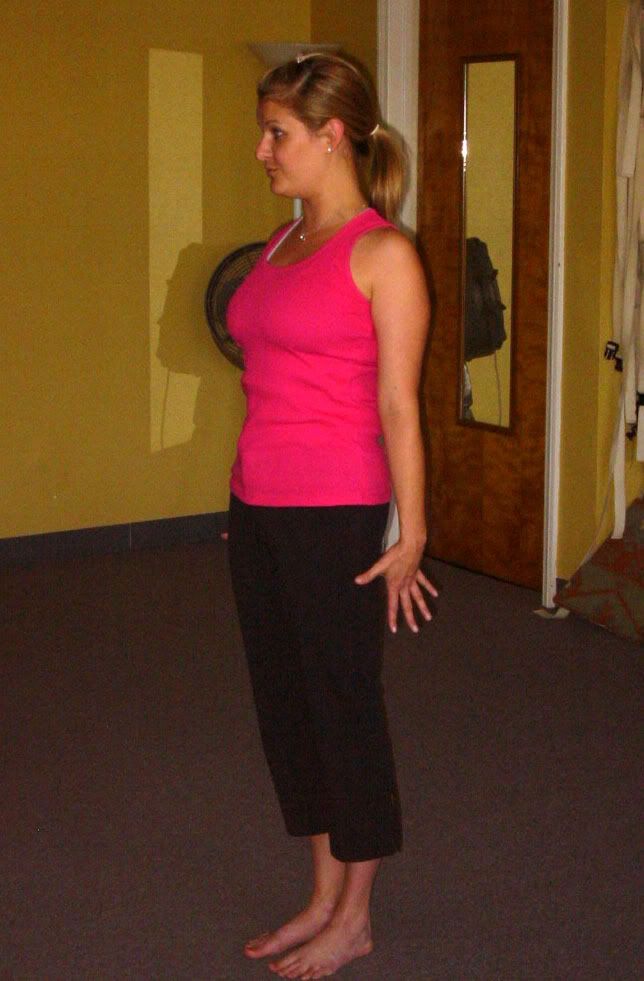
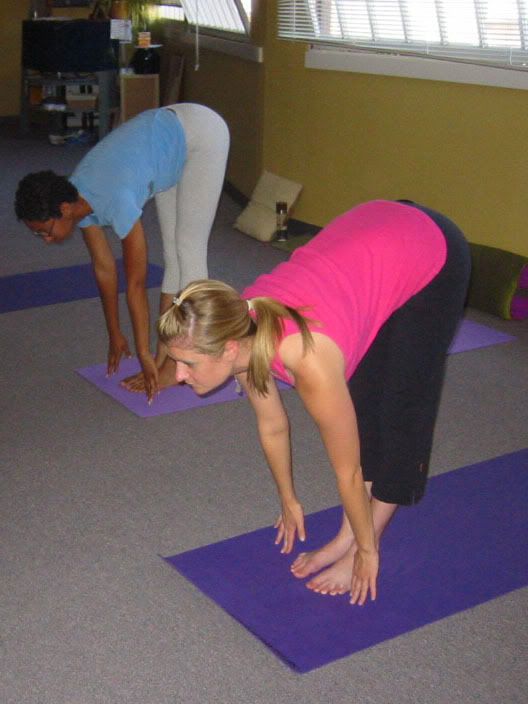
Here are some photos of our group in their practice.