Iyengar Yoga – Use of Props

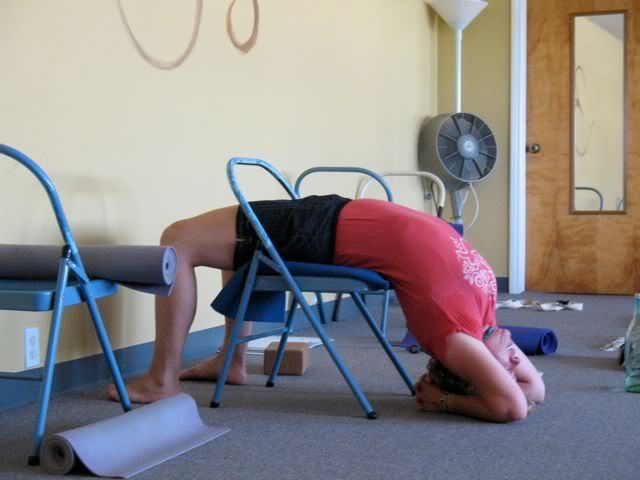
Iyengar Yoga as developed by the Indian master, BKS Iyengar, is one of the more structured of the yoga asana systems, with great emphasis on precision. As a teenager Mr. Iyengar learned the basics of yoga asana from his teacher, T. Krishnamacharya. He is a nephew of Krishnamacharya by marriage and lived in the household of his teacher for a number of years. Iyengar later went on to study the asanas in great detail through personal practice, and published one of the first comprehensive books about yoga asana, “Light On Yoga” in the 1970’s. The Iyengar tradition uses equipment (or props) as a way of deepening one`s experience in the yoga postures, as well as making use of props in therapeutic situations.

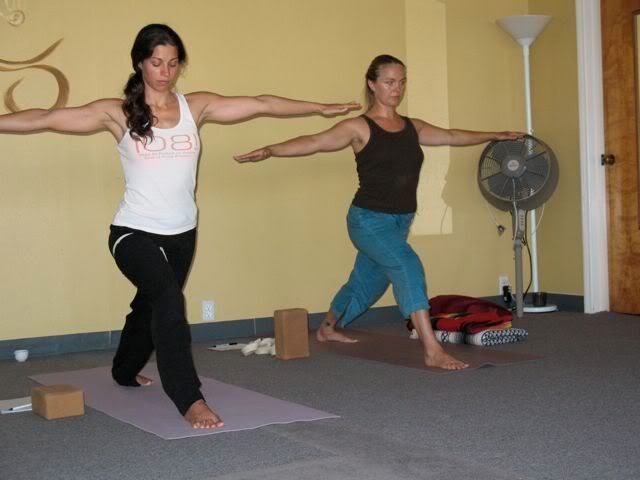
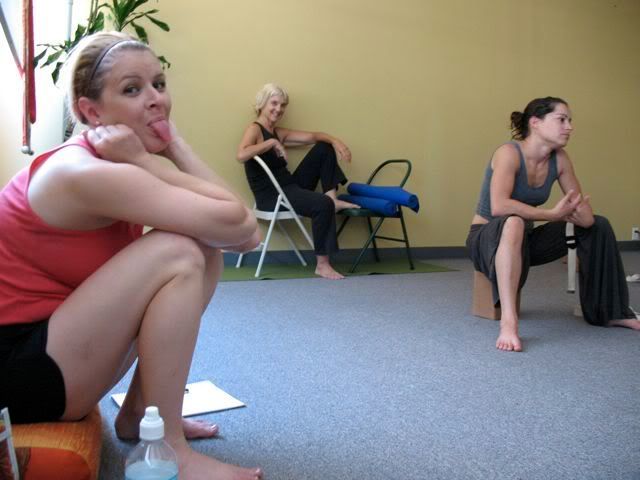
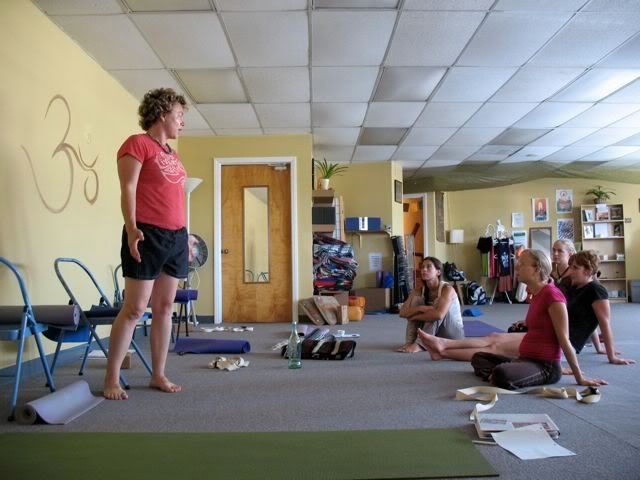
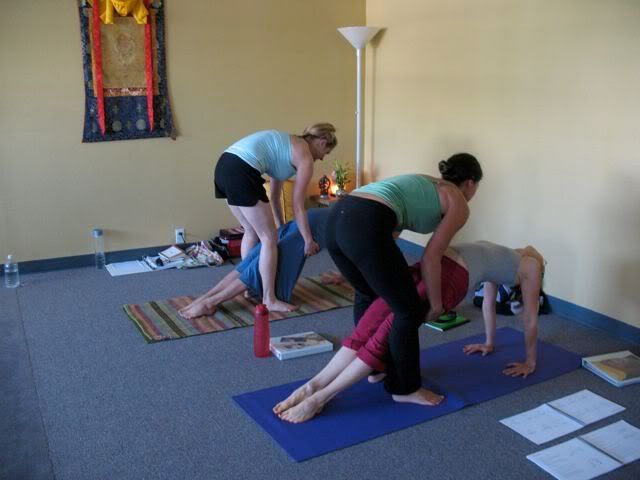
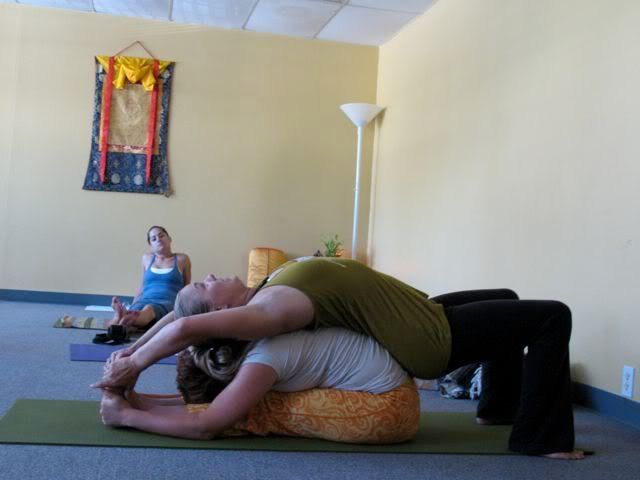
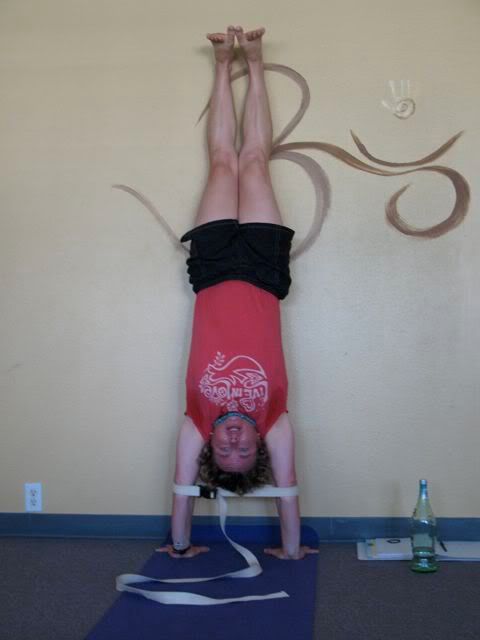
On August 2&3 Yoganic teacher, Kim Kolibri, a certified Iyengar instructor, presented workshops on Iyengar sequencing and use of props. Kim is an especially gifted verbal instructor, inspiring with her understanding and execution of Iyengar’s techniques. In the following photos we have documented some of the work and “play” of our Teacher Training group on this weekend. Click on the photos if you wish a larger view.
Teaching with the Hands & Voice

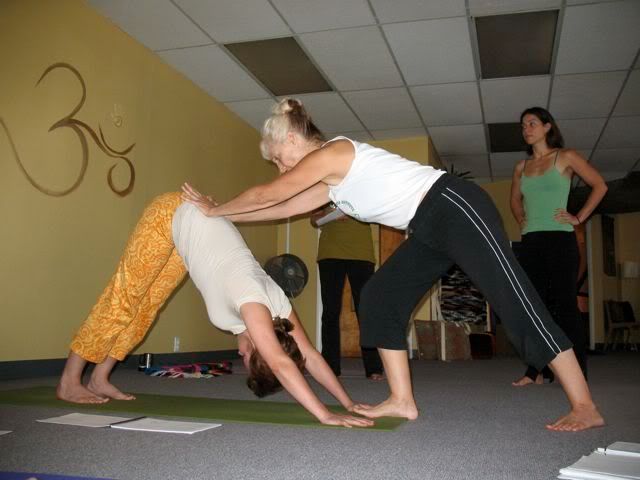
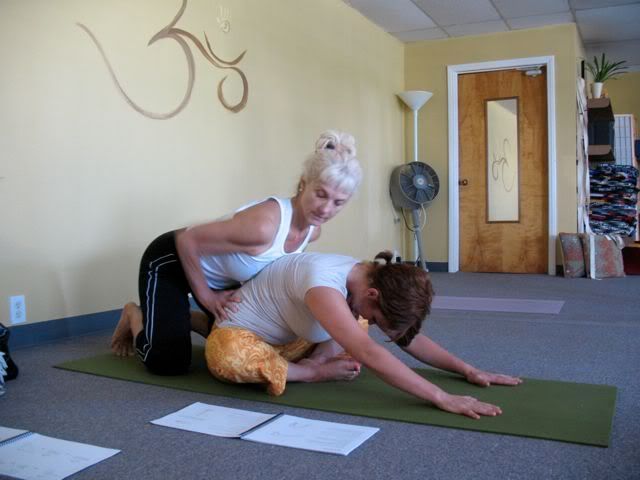
In the Ashtanga Vinyasa system the primary style of study as taught by Master Teacher Pattabhi Jois at his Indian yoga shala (school) in Mysore, India is called “Mysore practice”. In these classes students practice in the room with the teacher but there is very little verbal instruction. Students are expected to have their sequence memorized. The teacher is available to give hands on assistance and advice, much like a private class in a group class situation. In week twelve of our Teacher Training we have begun studying how to assist with the hands as well as teaching with the voice.

Teaching with the voice is the more common way to conduct a class and certainly the most direct way to share information. Just as practicing the yoga postures is necessary in order to become proficient in their execution, so practice teaching with the voice is a necessary requirement in the training of a yoga instructor. Initially there is some hesitation, over time one develops confidence.

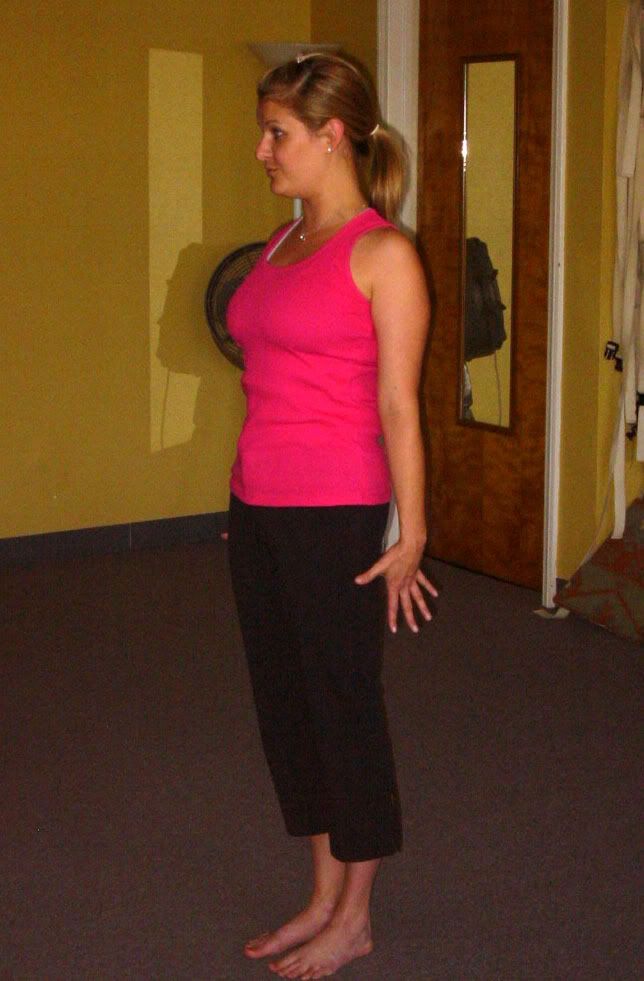
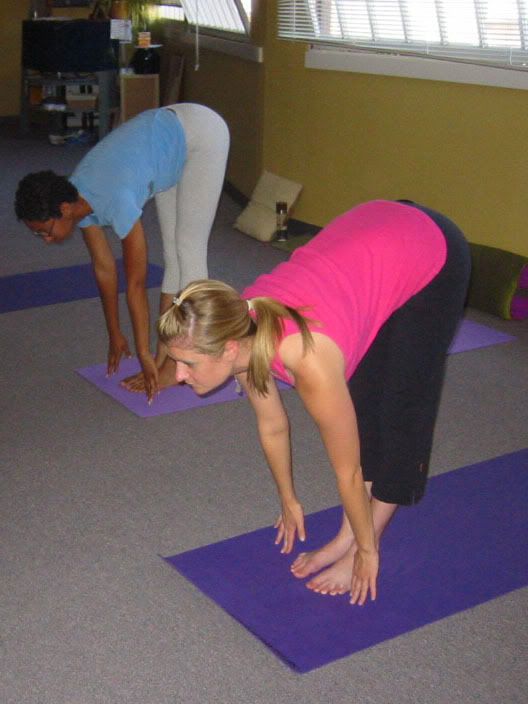
Here are some photos of our group in their practice.

Sanskrit Quiz!

In the fifth weekend of our Teacher Training Intensive the students were given a quiz on the Sanskrit terms necessary to understand in identifying the asanas (postures). Sanskrit is a beautiful language, like Latin, in that it is the origin of other languages. In India, Sanskrit is known as “the language of the Gods”.

There are several major schools of Yoga coming from India. Most of the schools have similar postures but call them by different names. This makes for some confusion when discussing asanas. As well, in different regions in India they tend to shorten part of the pronunciation, asana becomes asan. This shifts the accent of the word; “Ut ta NA sa na” becomes “Ut TAN a san”.

Since our Training emphasizes the work of Krishnamacharya, the names of the postures tend to be the same however the pronunciations can be different. As students and practitioners of yoga it is important to stay flexible in the mind. ears, and tongue, as well as cultivating flexibility in the body!